

Your Golf Bud
by Bud Key, Mid-Atlantic Director, TeeTime Golf Pass
전통에 기반을 둔 나무 티
Before my dad passed away, he often advised, “Let’s not put the cart before the horse,” a principle that guided many of our business and family decisions. This came to mind recently as I scrolled through a well-known golf retail website. The site was saturated with drivers, irons, putters, shoes, bags, training aids, and high-tech gadgets—essentially every imaginable piece of golf paraphernalia. Conspicuously absent, however, was the simple wooden golf tee, a humble gadget so common it’s often overlooked.
This is genuinely surprising when you stop to consider its significance.
Frankly, golf, as we know it, wouldn’t exist without the tee. Think about it: Tee times. Tee boxes. Tee markers. Tee shots… and yes, a shameless plug for our company, TeeTime Golf Pass. Forget A through S — golf starts with the letter “T,” yet we afford it little thought or respect.
Sure, the market is now flooded with fancy, plastic “game-improvement” tees. But the old school, geriatric crew I play with wouldn’t be caught dead using one. Besides, they’d probably bend like a Russian gymnast on the rock-hard tee areas of the old munis we frequent. Nope. Dig into our bags, and all you’ll find are honest-to-goodness American shreds of lumber. No worries if one breaks; they’re sold by the gross, or you can always scavenge an abandoned one nearby.
So, why do I firmly believe the wooden golf tee deserves our praise and adoration? Consider its origins: When golf was first invented, players would scoop out dirt from the hole just played, walk two club lengths from it, and hand-build a mound, or “tee,” out of the soil. Later, a box of sand and water was provided beside each tee area for players to construct their mounds. I can only imagine the agonizing slow play caused by all that construction.
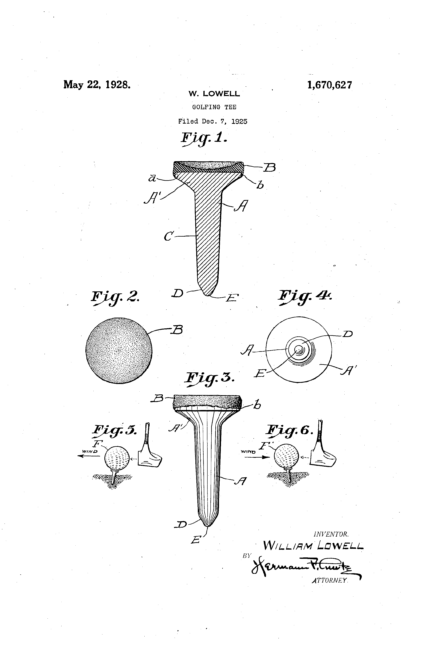
It wasn’t until 1920 that Dr. William Lowell of Maplewood, NJ, patented a wooden golf tee that closely resembles the one we use today. Called the “Reddy Tee” for its bright red paint, it was described as a “sharp pointed peg with a concave top.”
Dr. Lowell was also the first inventor-slash-entrepreneur to grasp the marketing power of celebrity endorsements. The “Reddy Tee” didn’t gain widespread acceptance until the popular Walter Hagen began using them on Tour in the summer of 1922. The rest is, regrettably, easily forgotten history.

Bud Key is TeeTime Golf Pass’s Mid-Atlantic Director and a former magazine editor with decades of golf writing experience. Your Golf Bud is his ongoing column on the game, the people who play it, and everything in between.